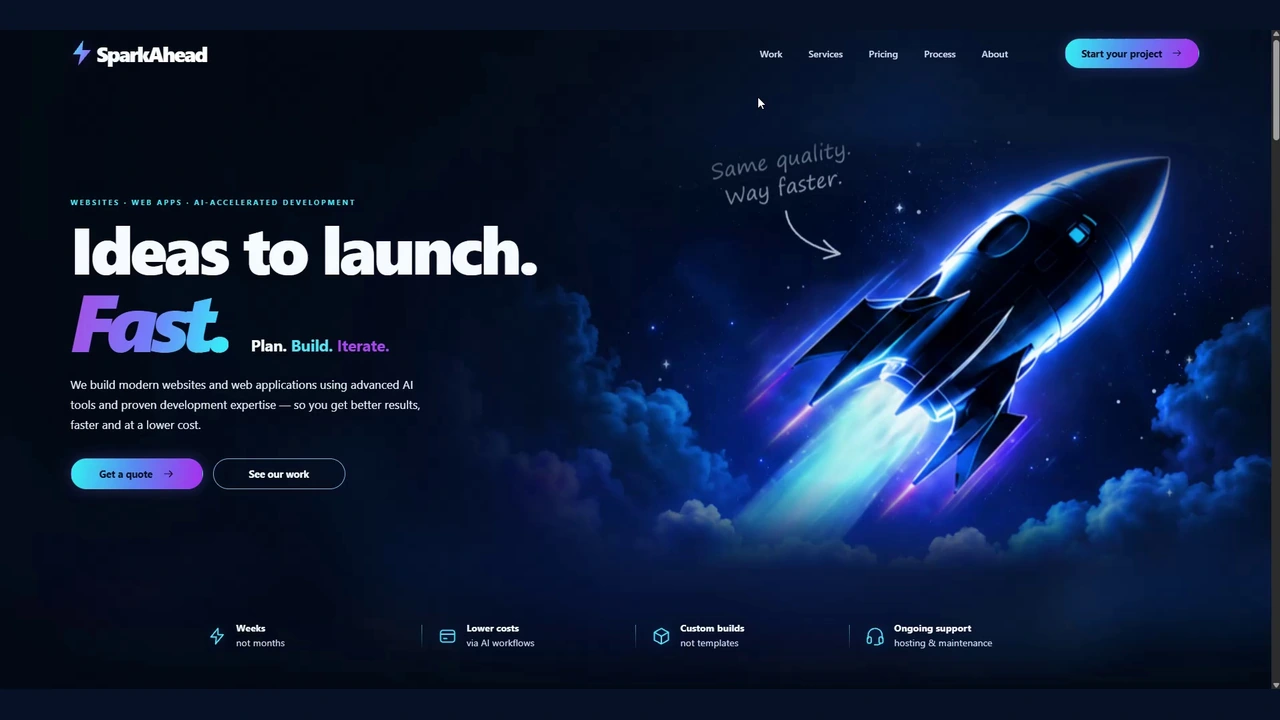
There's a lot of noise around AI and software development at the moment.
Everywhere you look, somebody is promising to build an entire website in 30 seconds, launch an application with a single prompt, or replace developers altogether.
And while AI has genuinely changed what's possible, I think there's a much more interesting story to tell.
What happens when you combine years of real development experience with modern AI tools, and use them to build something properly?
That's the idea behind SparkAhead.
And rather than just tell you about it, I thought I'd show you how I built this very website.
It started with an idea
I've been building websites and software for years.
From traditional business websites to complex web applications, I've spent a lot of time solving problems, writing code, fixing things that don't work and finding better ways to build.
More recently, I've been developing FarmTide, an oyster farm management platform, alongside other projects including an e-commerce store and a restaurant website rebuild.
Something became increasingly obvious.
With the right development workflow, AI was allowing me to get from an idea to a working application significantly faster than I could using traditional development methods alone.
Not because the work had become effortless.
But because I could spend less time writing repetitive code and more time thinking about how things should actually work.
That got me thinking.
What if I took that same approach and offered it to other businesses?
Beautiful websites. Custom applications. Modern technology. Faster development. More competitive pricing.
SparkAhead was born.
Step 1: Plan
Before writing a line of code, I needed to decide what SparkAhead should be.
I didn't want another generic web development agency website. You know the type — white background, stock photos, a few colourful shapes and the usual promises about digital transformation.
I'm a technology enthusiast. I love building things, experimenting with new tools, software, gaming and the creative possibilities technology opens up.
I wanted the website to reflect that.
Something modern. Almost futuristic. A little playful, but still professional enough that a business owner would trust me with their project.
We explored different names, brand directions and visual concepts.
Eventually, SparkAhead stood out.
It was simple, easy to remember and captured two things I wanted the business to represent: the spark of a new idea and the momentum to move it forward.
The visual direction followed naturally.
A dark, atmospheric design. Electric cyan and purple. A lightning-bolt logo. And a rocket launching through a glowing, cloud-filled sky.
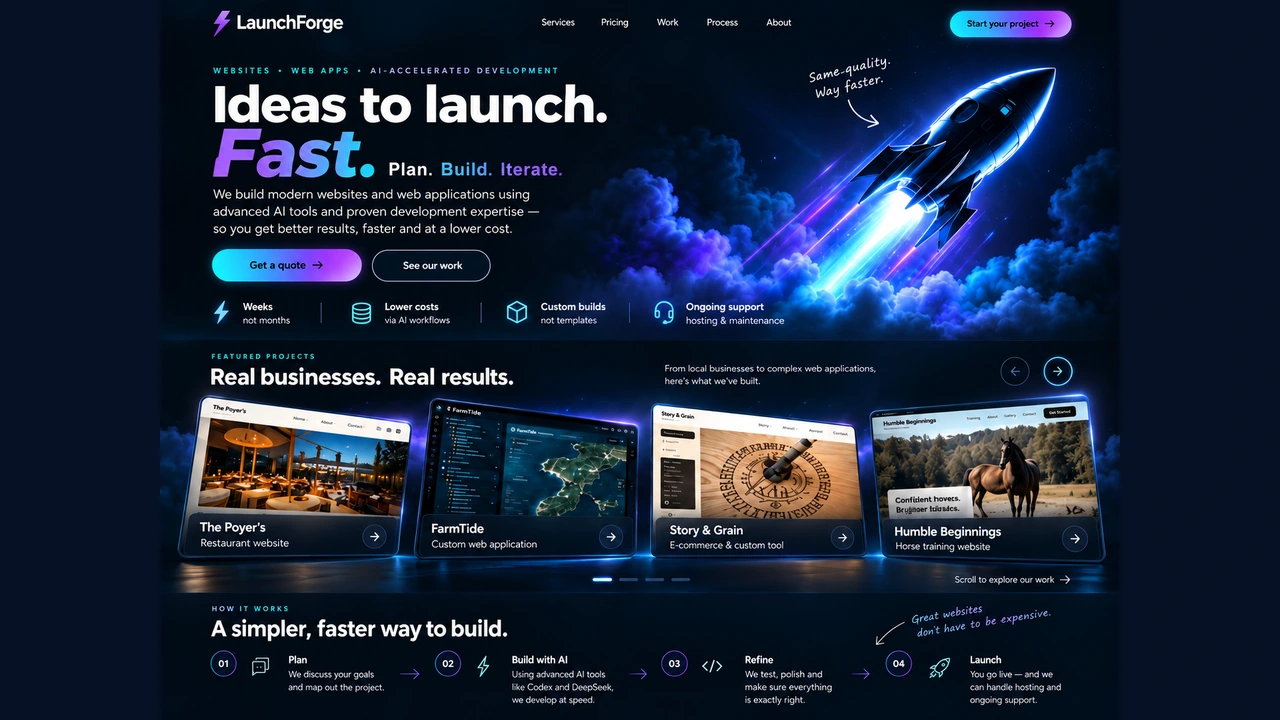
An early design concept, before we settled on the SparkAhead name.
The tagline came from something I'd already been doing for years.
Plan. Build. Iterate.
Three simple words that describe my entire development philosophy.
Step 2: Build
With the design direction established, it was time to turn the concept into a working website.
I chose SvelteKit and Svelte 5, with Cloudflare as the intended hosting platform.
Rather than manually write every component from scratch, I used AI coding tools through Codex to accelerate development.
I provided the design references, described the functionality I wanted, established the technical requirements and let the coding agent get to work.
The first implementation included a responsive homepage, animated rocket hero, interactive portfolio carousel, project-detail modals, services, pricing and contact sections.
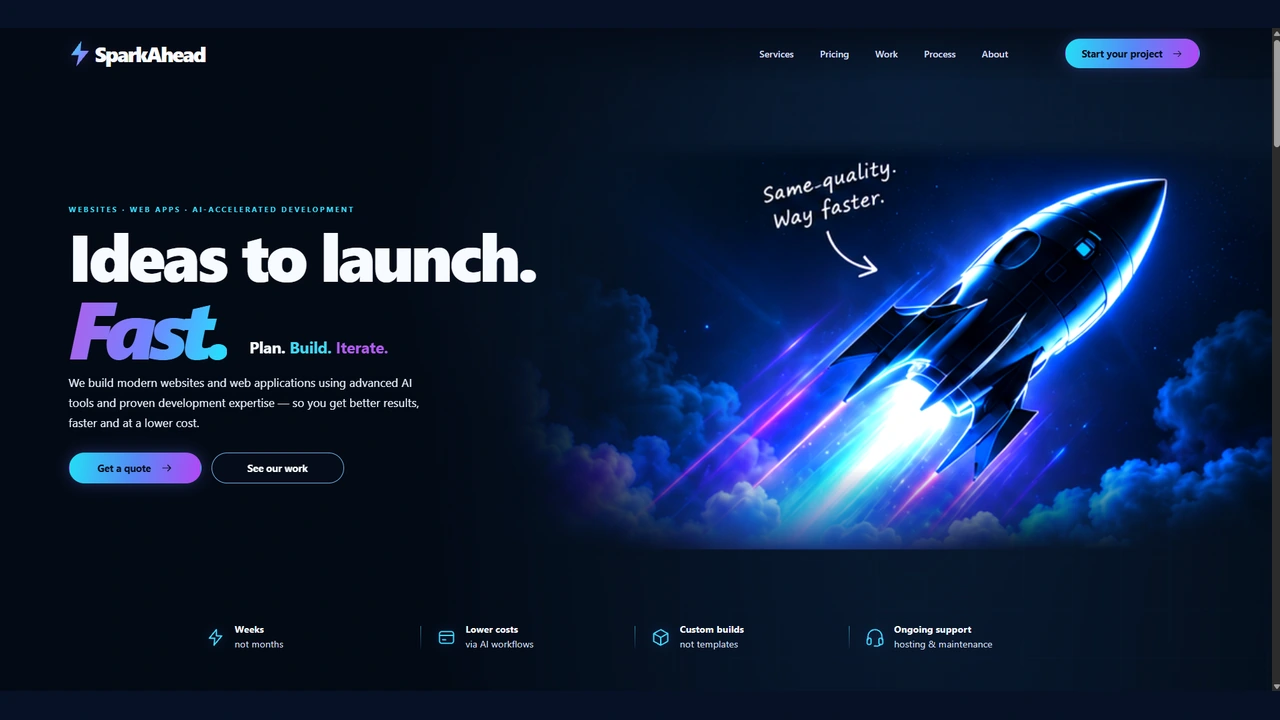
The first running implementation gave us something real to review and improve.
It was a working foundation.
And it arrived far more quickly than an equivalent traditional build would have taken me.
But was it finished?
Not even close.
And that's where the most important part of the process began.
Step 3: Iterate
There's a misconception that AI development means typing a prompt, getting some code back and calling the job done.
In my experience, that's rarely how you get a really good result.
The first SparkAhead website looked promising, but I could immediately see things I wanted to improve.
The hero felt too much like a rectangular banner. Sections were cramped. The project carousel needed more presence. The navigation lacked polish.
So I reviewed the site, recorded what I was seeing, identified the problems and worked through them with the coding tools.
We made the hero more immersive, extended the atmosphere across the screen, improved the spacing and developed a more cinematic presentation.
Then came the rocket.
I wanted it to feel alive.
Not just a static picture with a little movement, but a believable scene with twinkling stars, drifting clouds, an animated engine and a subtle response to mouse movement.
It sounded straightforward.
It wasn't.
The original artwork was a flattened image. The rocket, clouds, exhaust and background were effectively baked together.
That meant we couldn't simply animate each element independently.
We needed to rethink how the scene was constructed.
The solution involved separating the visual effects into layers, rebuilding the background atmosphere, adding independent star animations and creating a separate treatment for the rocket and its exhaust.
And then we iterated again.
The stars initially twinkled in an unnatural diagonal pattern.
Some of the exhaust streaks looked more like random laser beams.
One animation introduced an ugly dark band moving across the scene.
Part of the rocket's fin was being clipped.
Even the handwritten annotation above the rocket looked slightly blurry because it was part of the original image.
Each issue became another small improvement.
Some effects were refined. Others were removed. The handwritten annotation was rebuilt as crisp vector artwork. The propulsion animation became more sophisticated, with flowing energy rather than a simple pulsing glow.
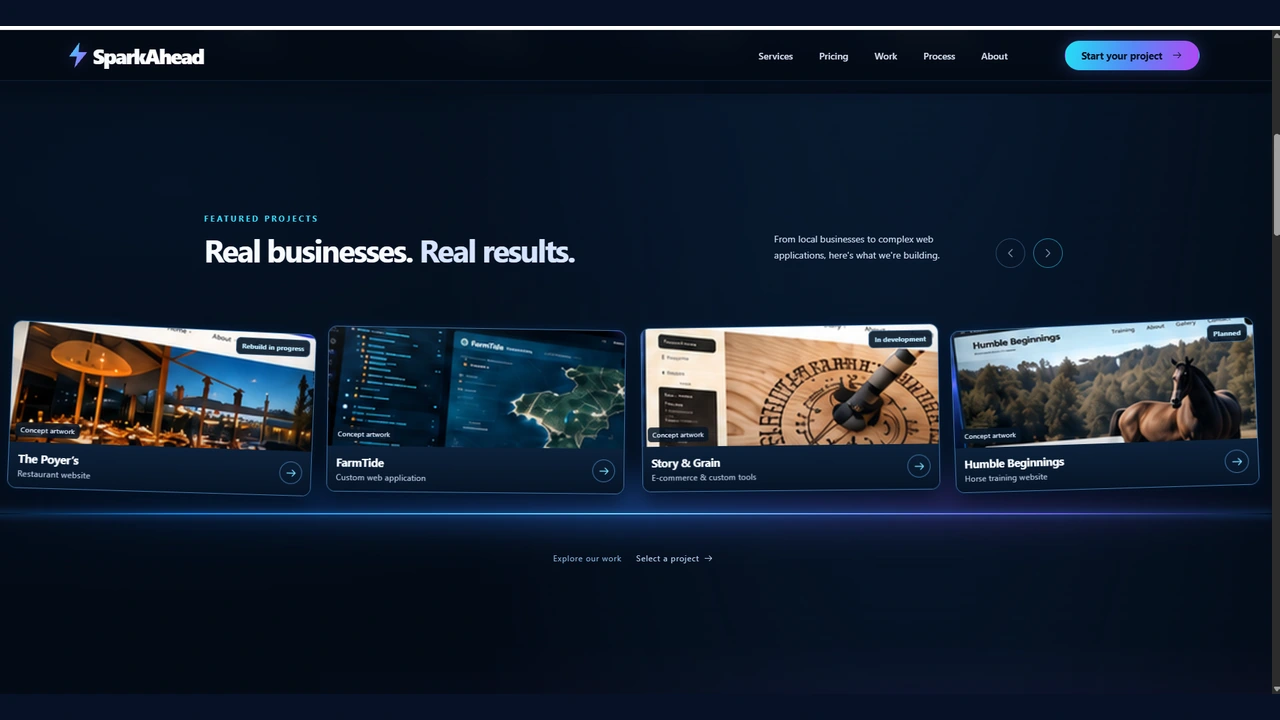
The portfolio became a proper showcase, with larger cards and more deliberate spacing.
We also reviewed the scrolling performance, tested different approaches and rejected a smooth-scrolling library when it didn't provide the improvement we wanted.
That's iteration. Not blindly adding features, but continually asking whether something actually makes the result better.
And importantly, knowing when to leave something alone.
AI doesn't replace the thinking
Here's the part I think gets overlooked in all the excitement around AI-generated software.
The AI tools didn't independently decide what SparkAhead should look like.
They didn't know which animations I would find distracting, whether a section felt too cramped, or when the overall design finally felt right.
Those decisions still required judgement, experience and a clear understanding of what I wanted to achieve.
AI accelerated the implementation.
I directed the work, reviewed the results, identified problems and decided what needed improving.
Sometimes that meant writing a detailed specification. Sometimes it meant switching to a more capable coding model for a particularly difficult task. Other times it meant removing something that looked clever in code but simply didn't look good on screen.
That's how I believe AI should be used in professional development.
Not as a replacement for experience, but as a way to make that experience more productive.
What does that mean for your business?
It means the economics of custom web development are changing.
A professionally built website or application still needs thoughtful design, reliable functionality, security, testing and ongoing maintenance.
Those things haven't suddenly become optional.
But the time required to implement many of them can now be dramatically reduced.
And when development takes less time, a small studio can deliver work that previously required substantially larger budgets.
That's what I want SparkAhead to offer.
Not cheap, disposable websites.
Not generic templates with your business name swapped into the heading.
But carefully designed websites and applications, built with modern technology and accelerated by AI.
Whether you're modernising an ageing business website, launching an online store or developing a completely custom business tool, the process remains the same.
Plan. Understand what you're trying to achieve and design the right solution.
Build. Use the best available tools to get a working result into your hands quickly.
Iterate. Test it, improve it and refine the details until it's right.
Building for what comes next
There's another reason I'm excited about this approach.
AI is changing more than how websites are built. It's beginning to change how people use them.
We're moving towards a world where AI assistants can help customers research businesses, compare services, make bookings and interact with websites.
I believe websites will increasingly need to be designed for both human visitors and the AI assistants acting on their behalf.
That creates opportunities for small businesses that previously couldn't afford sophisticated digital systems.
It's an area I'm actively exploring as SparkAhead develops.
The goal isn't just to build websites faster.
It's to build websites that are ready for what comes next.
The result
SparkAhead itself is an ongoing example of the process.
The initial concept became a working website. That website went through repeated rounds of review, refinement and testing. Each iteration brought the design closer to what I'd originally imagined.
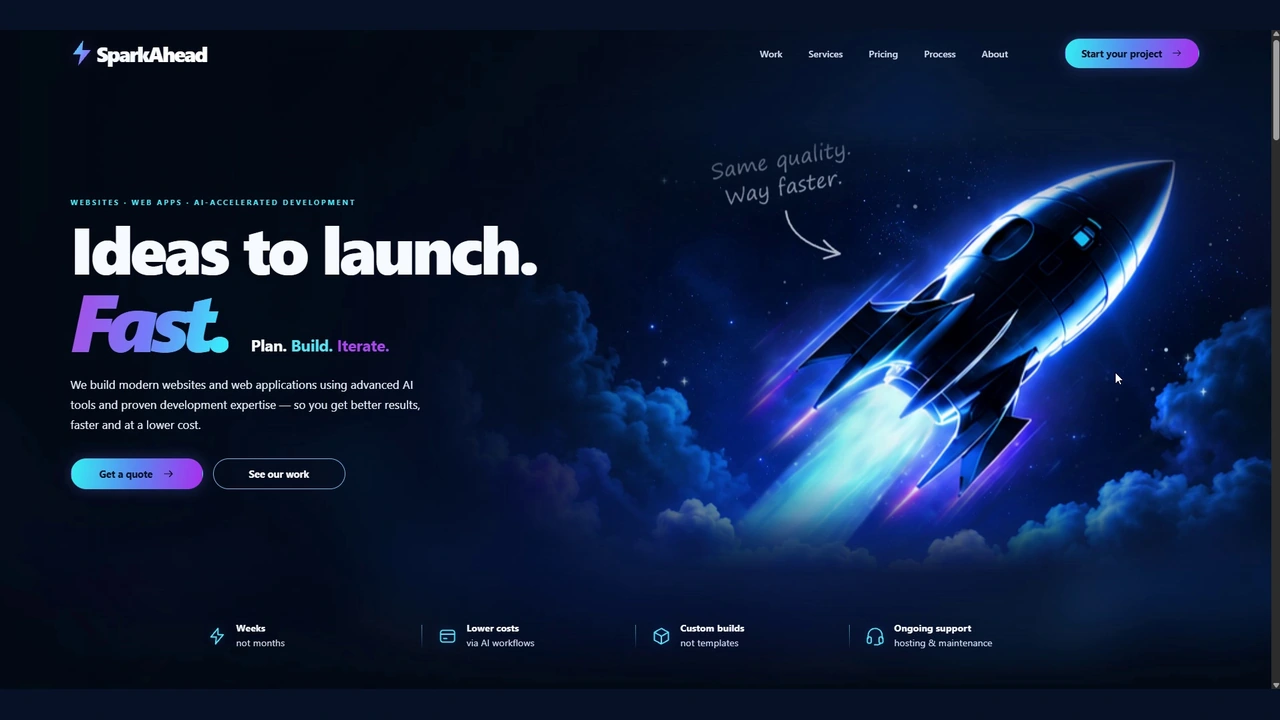
The refined hero, after multiple rounds of visual review and animation work.
There were failed experiments along the way. There always are.
But that's part of building good software.
The difference today is how quickly we can work through those experiments, learn from them and arrive at something better.
And that's really the philosophy behind this business.
Plan. Build. Iterate.
If you've got an idea for a website or application, or an existing website that's ready for a modern rebuild, I'd love to hear about it.
Let's see what we can build.
— Founder, SparkAhead